
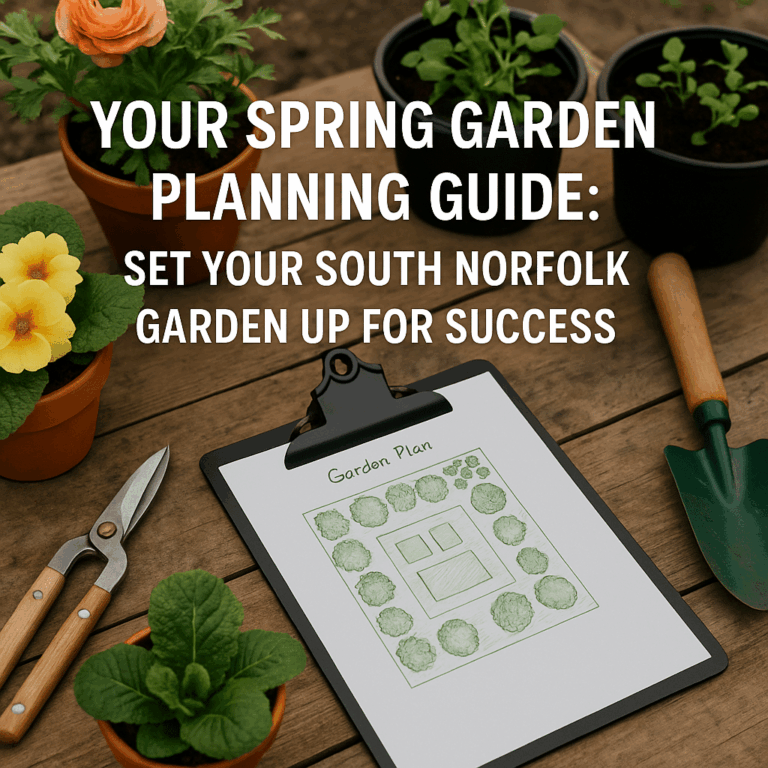
The first warmer days of spring can make it tempting to start cutting, clearing and planting immediately. Taking time to assess the garden first can help you prioritise the work, avoid unnecessary purchases and plan around the time you realistically have available.
Here is a practical way to approach spring garden planning without trying to tackle everything at once.
Start with a Walk-Round Assessment
Before starting work, walk around the garden with a notebook or your phone and look at each area carefully.
- What worked well last year? Note the plants and areas that performed well without needing excessive attention.
- What struggled? Look for bare patches, overcrowded borders, damaged plants and areas where growth was poor.
- How do you use the garden? Consider which paths, seating areas, lawns and working spaces are genuinely useful.
- Where are the difficult areas? Note shade, exposed corners, poor drainage, awkward access and places where water collects.
Photographs can help you compare changes over time and explain the work if you later ask someone for a quotation.
Define Your Garden Goals
Different gardens need to do different jobs. Before choosing plants or buying materials, decide what matters most to you.
- Lower maintenance: Simplify complicated borders, use mulch where suitable and choose shrubs and other plants appropriate for the available space.
- Family use: Allow for practical paths, durable surfaces, suitable planting and space for play or seating.
- Wildlife: Include a range of flowering plants, shelter, water where practical and some less-disturbed areas.
- Outdoor seating: Consider sunlight, shade, privacy, access and how far the seating area is from the house.
- Food growing: Identify the sunniest areas and plan manageable beds or containers with access to water.
Many gardens need to serve more than one purpose. Setting priorities helps prevent one idea from taking over the whole space or creating more maintenance than you realistically want.
Create a Realistic Budget
Set a realistic budget before buying plants or starting work. Depending on the plan, costs may include:
- Plants, seeds, compost and mulch
- Timber, fencing and other materials
- Tool purchase or hire
- Delivery and waste arrangements
- Labour for work you do not intend to complete yourself
- A contingency for damaged materials or unexpected ground conditions
Avoid relying on generic online price estimates. Material costs, access and the amount of preparation required can make apparently similar projects very different in price. If you ask a gardener or contractor for a quotation, make sure the proposed work and any exclusions are clearly described.en redesign runs into thousands. Knowing your limits upfront prevents mid-project compromises.
Think in Phases, Not One Big Push
Trying to change the whole garden at once can lead to unfinished work, unnecessary purchases and areas being disturbed at the wrong time.
A phased approach might include:
- First: Deal with urgent clearance, access problems and basic preparation.
- Next: Complete the highest-priority planting, lawn or structural work.
- Then: Add lower-priority improvements once you have seen how the first changes perform.
- Ongoing: Review maintenance needs as the seasons and garden conditions change.
The order and timing will depend on the weather, soil conditions, plants involved and the type of work. Spreading the project also gives you time to adjust the plan before committing to every element.
Consider Your Time Commitment
Be realistic about how much time you want to spend maintaining the garden. Size alone does not determine the workload: lawns, hedges, borders, containers and food-growing areas all require different levels of attention.
Consider:
- How often the lawn and hedges will need cutting
- How much watering will be practical during dry periods
- Whether borders can be simplified or mulched
- How quickly plants are likely to outgrow their available space
- Which seasonal jobs you are comfortable completing yourself
- Whether occasional or regular maintenance help would be useful
Design the garden around the time you genuinely have available rather than an ideal routine that may be difficult to maintain.
Plan for Local Conditions
Soil, shelter and drainage can vary considerably across South Norfolk—and even between neighbouring gardens. Check the conditions in your own garden rather than assuming that general regional advice will apply everywhere.
- Soil: Examine the soil’s texture, drainage and pH before choosing plants or adding amendments. Do not assume every local garden has heavy clay.
- Rainfall: Eastern England is one of the drier parts of the UK, although individual seasons vary. Water butts, suitable mulching and careful watering can help during prolonged dry periods.
- Frost: There is no completely reliable last-frost date for every garden. Low-lying, exposed and sheltered sites can behave differently, so check the local forecast before planting out tender plants.
- Wind and exposure: Consider whether young plants, taller plants or new structures will need shelter, support or a more protected position.
- Plant choice: Choose plants for the available light, soil, drainage and space, and check their expected mature size before planting.
Observe how your garden responds through the seasons and adjust the plan accordingly.
Sketch It Out
You do not need a polished garden design. A simple sketch with approximate measurements can help you:
- Compare possible changes before buying materials
- Estimate quantities for plants, turf, mulch or fencing
- Check that paths, seating and working areas have enough space
- Record access points and awkward areas
- Explain the proposed work when requesting a quotation
Graph paper and a pencil are sufficient. You could also print a photograph of the garden and draw proposed changes over it.
When to Bring In Help
Some garden work is suitable for a straightforward DIY approach, while other jobs require particular skills, equipment or insurance.
- Tree surgery and climbing work: Use a suitably qualified and insured tree contractor.
- Electrical installations: Garden lighting and outdoor power work may require an appropriately qualified electrician.
- Major retaining structures or extensive hard landscaping: Seek advice from a contractor experienced in that type of construction.
- Large or difficult clearances: Consider access, likely waste quantities and whether specialist equipment or a customer-arranged skip will be needed.
- Routine garden maintenance: Regular or occasional help may be useful if the work exceeds the time or equipment you have available.
Ask what is included in a quotation and clarify responsibility for materials, access and waste before work begins.
Ready to Get Started?
Once you have assessed the garden and set some priorities, the next step is to decide what can be completed now and what should wait. My guide to March garden jobs covers some of the practical seasonal tasks to consider.
If you need help with regular maintenance, a seasonal tidy-up or selected practical garden work, I serve Norwich and surrounding South Norfolk villages from Swardeston. Request a quote with details and photographs of the work required.